Fire can spread within minutes, turning a minor incident into a major emergency. In those critical first moments, having the right fire extinguisher nearby can help control a small fire before it grows beyond control. However, not every fire extinguisher is designed to tackle every type of fire. Using the wrong extinguisher can not only fail to stop the fire but also make the situation significantly more dangerous.
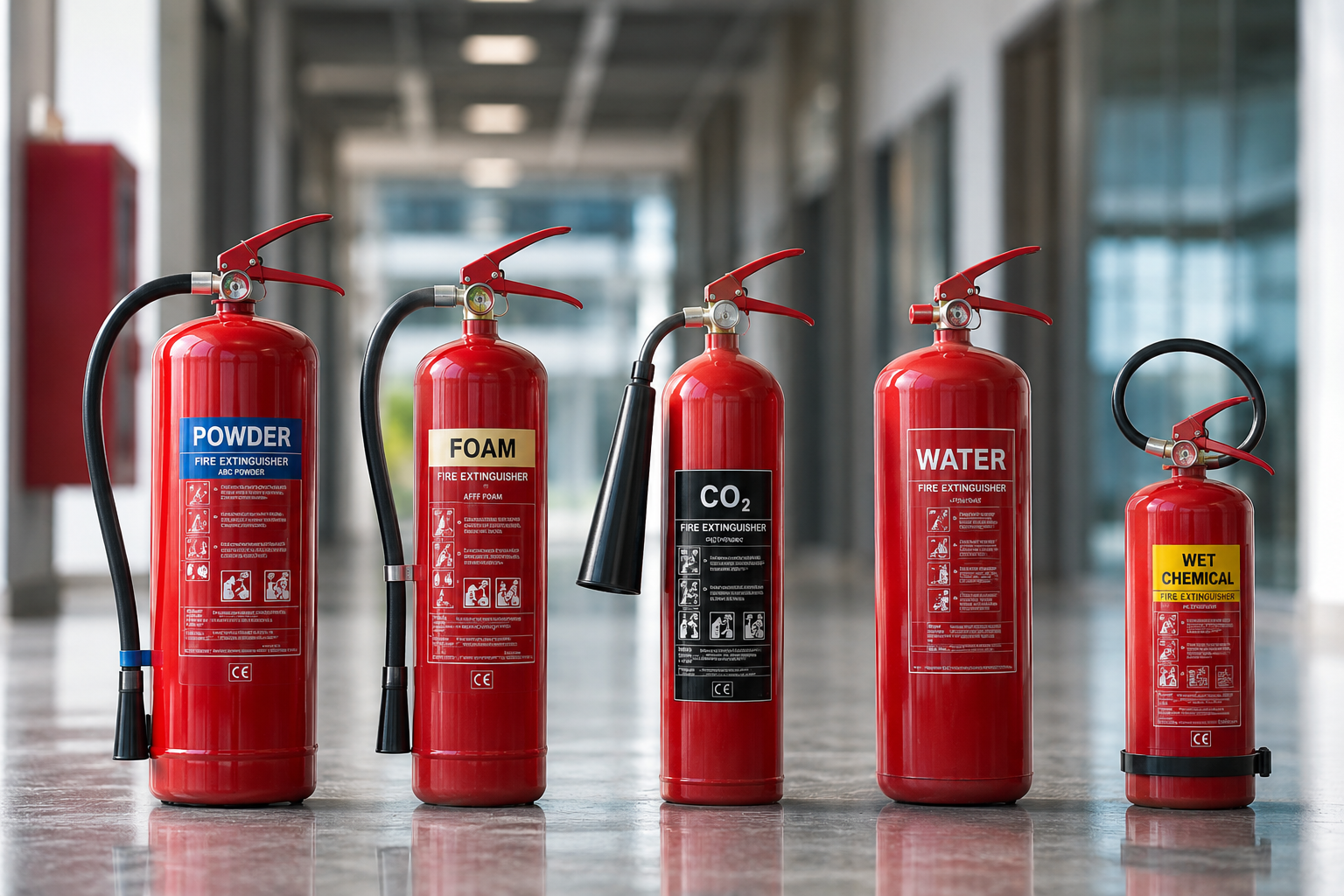
Many people assume that all red fire extinguishers work the same way, but the extinguishing agent inside determines which type of fire it can safely handle. Water, foam, carbon dioxide (CO₂), dry powder, and wet chemical extinguishers are all designed for different fire hazards, making correct selection an essential part of every building’s fire safety strategy.
For businesses across the UAE, choosing the right extinguisher is more than a safety decision—it is also part of maintaining regulatory compliance, protecting valuable assets, and ensuring business continuity. This is why many organisations work with a trusted fire safety company in Dubai to assess workplace risks, recommend suitable fire extinguishers, and provide ongoing maintenance services.
Why Choosing the Right Fire Extinguisher Matters
Portable fire extinguishers are designed to control fires during their early stages, giving occupants valuable time to evacuate safely while preventing a small incident from becoming a devastating fire.
However, an extinguisher is only effective when it matches the type of fire.
For example, using water on an electrical fire could increase the risk of electric shock, while using water on burning cooking oil can cause the flames to spread violently. Similarly, a standard dry powder extinguisher may suppress certain fires effectively but could leave corrosive residue that damages sensitive electronic equipment.
This is why understanding different fire classes is just as important as having extinguishers installed.
Professional guidance from an experienced fire safety company in Dubai helps businesses identify the correct extinguisher for each risk area instead of relying on a one-size-fits-all approach.
Understanding Fire Classes
Before selecting an extinguisher, it is important to understand what is actually burning. Fire extinguishers are classified according to the fuel source rather than the size of the fire.
Class A Fires
Class A fires involve ordinary combustible materials such as:
- Wood
- Paper
- Cardboard
- Fabric
- Plastics
These are among the most common fire risks found in offices, schools, hotels, and commercial buildings.
Class B Fires
These involve flammable liquids including:
- Petrol
- Diesel
- Paints
- Solvents
- Oils
Fuel storage areas, workshops, warehouses, and maintenance facilities commonly face these risks.
Electrical Fires
Electrical fires originate from energised electrical equipment, including:
- Distribution boards
- Switchgear
- Server rooms
- Office equipment
- Electrical control panels
These fires require extinguishing agents that do not conduct electricity.
Class D Fires
Although less common, Class D fires involve combustible metals such as:
- Magnesium
- Titanium
- Sodium
- Lithium
These typically occur in specialised industrial and manufacturing environments.
Class K (Kitchen) Fires
Commercial kitchens present unique fire hazards due to high-temperature cooking oils and fats.
Restaurants, hotels, cafeterias, and catering facilities require specialised extinguishers specifically designed for these risks.
Understanding these fire classes allows businesses to select equipment that performs safely and effectively during an emergency.
Types of Fire Extinguishers Explained
Water Fire Extinguishers
Water extinguishers remain one of the most common choices for ordinary combustible fires.
They are highly effective for:
- Wood
- Paper
- Cardboard
- Cloth
- General office materials
Water works by cooling the burning material until combustion stops.
However, water extinguishers should never be used on:
- Electrical fires
- Flammable liquid fires
- Cooking oil fires
- Metal fires
Although simple in design, they remain an excellent choice for many commercial offices, educational facilities, and administrative buildings where Class A hazards are most common.
Foam Fire Extinguishers
Foam extinguishers are suitable for both Class A and Class B fires, making them a versatile option for many commercial environments.
They work by creating a foam blanket that separates the fuel from oxygen while simultaneously cooling the fire.
Foam extinguishers are commonly installed in:
- Warehouses
- Workshops
- Fuel storage areas
- Commercial garages
- Manufacturing facilities
However, they should not be selected for kitchen oil fires or combustible metal fires unless specifically designed for those applications.
Because many commercial buildings contain mixed fire risks, professional site assessments are essential. An experienced fire safety company in Dubai can evaluate occupancy types, fuel loads, and operational hazards before recommending the most suitable extinguisher locations.
Carbon Dioxide (CO₂) Fire Extinguishers
CO₂ extinguishers are specifically designed for electrical equipment and flammable liquid fires.
Unlike powder extinguishers, CO₂ leaves no residue, making it ideal for protecting valuable electronics.
They are widely used in:
- Server rooms
- Data centres
- Electrical substations
- IT departments
- Control rooms
- Telecommunications facilities
The carbon dioxide gas displaces oxygen around the fire while cooling the immediate area, helping suppress flames without damaging sensitive equipment.
As businesses continue investing in digital infrastructure, CO₂ extinguishers have become an increasingly important part of modern commercial fire protection strategies.
Dry Powder Fire Extinguishers
Dry powder extinguishers, often referred to as ABC extinguishers, are among the most versatile portable fire extinguishers available. They are suitable for tackling Class A, Class B, and electrical fires, making them a popular choice for industrial facilities, warehouses, construction sites, and logistics operations.
The powder works by interrupting the chemical reaction that sustains a fire while forming a barrier between the fuel and oxygen.
They are commonly installed in:
- Industrial plants
- Warehouses
- Loading bays
- Vehicle workshops
- Fuel storage areas
- Construction sites
However, dry powder extinguishers are not always the best option for enclosed office spaces. The powder residue can reduce visibility during an emergency and may damage sensitive electronic equipment, leading to costly cleanup and repairs. This is why selecting an extinguisher should always be based on the specific risks within the building rather than choosing a single solution for every area.
Wet Chemical Fire Extinguishers
Commercial kitchens present unique fire risks because cooking oils and fats burn at extremely high temperatures. Traditional extinguishers are often ineffective and, in some cases, dangerous when used on these fires.
Wet chemical extinguishers are specifically designed for Class K fires. They work through a process known as saponification, where the extinguishing agent reacts with hot cooking oil to create a cooling, soap-like layer that prevents re-ignition.
These extinguishers are essential in:
- Restaurants
- Hotels
- Commercial kitchens
- Food courts
- Catering facilities
As Dubai’s hospitality sector continues to grow, ensuring kitchens are equipped with the correct extinguishers is an important part of both operational safety and regulatory compliance.
Which Fire Extinguisher Is Best for Different Workplaces?
Choosing the right extinguisher depends on the type of hazards present within the building. A proper fire risk assessment helps determine the safest combination of extinguishers for each environment.
| Workplace | Recommended Fire Extinguisher |
| Offices | Water and CO₂ |
| Schools | Water and ABC Dry Powder |
| Warehouses | Foam or Dry Powder |
| Server Rooms | CO₂ or Clean Agent |
| Commercial Kitchens | Wet Chemical |
| Workshops & Garages | Foam or Dry Powder |
| Manufacturing Facilities | Dry Powder or Class D (where applicable) |
Rather than relying on a single extinguisher throughout a property, businesses should install equipment based on the specific fire hazards in each area. This approach improves safety while helping facilities meet fire protection requirements.
Common Mistakes Businesses Make
Despite investing in fire safety equipment, many businesses unknowingly increase their risk by making avoidable mistakes.
Some of the most common include:
- Installing the wrong type of extinguisher for the hazard.
- Blocking access to extinguishers with furniture or stored materials.
- Assuming every red extinguisher works the same way.
- Skipping routine inspections and maintenance.
- Failing to train employees on proper extinguisher use.
- Ignoring damaged, discharged, or expired extinguishers.
These issues can delay emergency response and reduce the effectiveness of portable fire protection when it is needed most.
Why Fire Extinguisher Refilling Should Never Be Delayed
A fire extinguisher that has been partially or fully discharged should never be returned to service without proper Fire Extinguisher refilling. Even a brief discharge can reduce internal pressure or deplete the extinguishing agent, leaving the unit unable to perform during the next emergency.
Professional refilling involves much more than simply replacing the extinguishing agent. Certified technicians inspect the cylinder, valves, pressure levels, seals, hoses, and discharge mechanisms to ensure the extinguisher remains safe and reliable.
For businesses, timely Fire Extinguisher refilling is an essential part of preventive maintenance. It supports workplace safety, helps maintain compliance with local fire safety requirements, and ensures equipment is always ready for use.
Why Fire Extinguisher Hydrotesting Is Essential
Over time, the cylinders of portable fire extinguishers are subjected to internal pressure, environmental conditions, and regular wear. Although an extinguisher may appear to be in good condition externally, hidden structural weaknesses can develop inside the cylinder.
This is why fire extinguisher Hydrotesting is a critical part of long-term maintenance.
Hydrotesting involves filling the cylinder with water and testing it under controlled pressure to verify its structural integrity. The process helps identify leaks, corrosion, deformation, or weakened metal before the extinguisher is returned to service.
Routine fire extinguisher Hydrotesting helps businesses:
- Confirm cylinder safety.
- Detect hidden damage.
- Extend equipment lifespan where appropriate.
- Maintain compliance with recognised inspection standards.
- Reduce the risk of equipment failure during an emergency.
Combined with scheduled inspections and servicing, hydrotesting helps ensure fire extinguishers remain dependable throughout their service life.
Fire Extinguisher Maintenance: A Critical Part of Fire Safety
Installing the correct extinguisher is only the first step. Ongoing maintenance is equally important to ensure equipment functions properly when needed.
Regular maintenance should include:
- Monthly visual inspections.
- Pressure gauge checks.
- Verification of safety pins and tamper seals.
- Inspection for corrosion, dents, or leaks.
- Clear and visible safety labels.
- Unobstructed access to every extinguisher.
- Scheduled servicing by qualified technicians.
Dubai’s high temperatures, humidity, and dusty conditions can accelerate wear on fire safety equipment, making regular inspections even more important for commercial and industrial facilities.
Many organisations choose to work with a trusted fire safety company in Dubai that can provide complete support, including inspections, maintenance, Fire Extinguisher refilling, fire extinguisher Hydrotesting, documentation, and compliance assistance. This proactive approach helps businesses remain prepared while minimising operational risks.
The Future of Fire Protection in Dubai
As Dubai continues to develop smart buildings, high-rise developments, and advanced commercial facilities, fire protection is evolving beyond traditional equipment. Businesses are increasingly adopting integrated safety solutions that combine portable extinguishers with intelligent monitoring systems, digital inspection records, and proactive maintenance programmes.
At the same time, there is growing demand for environmentally friendly extinguishing agents, clean-agent solutions for sensitive equipment, and service providers capable of delivering complete fire safety support—from installation and maintenance to compliance and emergency preparedness.
Conclusion
Selecting the right fire extinguisher is about far more than choosing the nearest red cylinder. Every workplace has unique fire risks, and using the correct extinguisher for each hazard can significantly reduce property damage, protect lives, and improve emergency response.
Understanding fire classes, selecting appropriate extinguishers, scheduling regular inspections, and carrying out professional Fire Extinguisher refilling and fire extinguisher Hydrotesting are all essential components of an effective fire protection strategy.
Whether you operate an office, warehouse, restaurant, industrial facility, or commercial building, partnering with an experienced fire safety company in Dubai ensures your fire protection systems remain compliant, well-maintained, and ready to perform when every second counts. By investing in the right equipment and ongoing maintenance, businesses can build a safer workplace while protecting their people, property, and operations for the long term.