Most people never expect to face a fire emergency.
Whether it’s an office, shopping centre, hotel, residential tower, or any other commercial building, a fire can start unexpectedly and spread much faster than many people realise. In those first few moments, confusion is common. Some people hesitate, some panic, and others assume someone else has already taken action.
The reality is that the first few minutes of a fire emergency are often the most important. Knowing how to respond can help protect lives and improve the chances of a safe evacuation.
This guide explains the essential steps every building occupant should know if a fire breaks out.
Stay Calm and Focus on Safety
The first reaction to a fire emergency often determines what happens next.
When people see smoke or hear a fire alarm, panic can quickly spread. Unfortunately, panic usually leads to poor decisions. Some people waste valuable time trying to understand what is happening, while others return for personal belongings or attempt to take unnecessary risks.
A calm response helps people think clearly and move toward safety faster.
The goal is simple: focus on protecting yourself and those around you.
Follow the R.A.C.E. Principle
Fire safety professionals often use a simple approach known as the R.A.C.E. principle.
It stands for:
- Rescue
- Alarm
- Confine
- Evacuate
These four steps provide a practical framework for responding during the early stages of a fire emergency.
Rescue Anyone in Immediate Danger
If someone nearby is at immediate risk and conditions are safe, help them move away from the affected area.
This could involve assisting a colleague, guiding a visitor, or helping someone who may struggle to evacuate on their own.
However, personal safety should never be compromised. Entering smoke-filled areas or attempting dangerous rescues can place additional lives at risk.
If conditions appear unsafe, focus on alerting emergency responders and evacuating immediately.
Raise the Alarm Without Delay
One of the most common mistakes during a fire emergency is assuming someone else has already reported it.
Never make that assumption.
As soon as smoke, flames, or signs of fire are discovered, activate the nearest fire alarm if possible and notify building security or emergency personnel.
Modern buildings are equipped with advanced fire alarm systems, smoke detectors, and emergency notification technologies, but quick human action still plays a critical role.
The sooner people are alerted, the sooner evacuation procedures can begin.
Help Contain the Spread if Possible
If it can be done safely while leaving the area, close doors behind you.
This small action can make a significant difference.
Smoke and heat often spread through open spaces much faster than people expect. Closing doors helps slow the movement of smoke and flames and allows fire-rated building components to perform as intended.
There is no need to lock doors. Simply closing them can help create valuable time for occupants and emergency responders.
Leave the Building Immediately
Once the alarm has been raised, evacuation should become the priority.
Many people make the mistake of stopping to collect laptops, bags, documents, or other belongings. During an emergency, those few extra moments can become critical.
Move toward the nearest designated exit and follow the evacuation instructions provided by building management or emergency systems.
Walk quickly, stay alert, and avoid pushing or rushing. A controlled evacuation is usually safer and more effective than a chaotic one.
Never Use Elevators During a Fire
This rule exists for a reason.
Elevators may stop functioning during a fire due to power interruptions, system failures, or emergency controls. In some situations, elevator shafts can also allow smoke to travel between floors.
Instead, use designated emergency stairways.
Most commercial buildings are designed with protected stairwells that provide a safer route to exit the building during emergencies.
Stay Low if You Encounter Smoke
Many people assume flames are the greatest threat during a fire.
In reality, smoke often causes more injuries than the fire itself.
Smoke can reduce visibility, affect breathing, and impair judgment within a very short period. If smoke is present, stay low and move toward the nearest exit.
The air closer to the floor is generally cleaner and easier to breathe.
Even a simple adjustment like staying below the smoke layer can make evacuation safer.
Should You Use a Fire Extinguisher?
The answer depends on the situation.
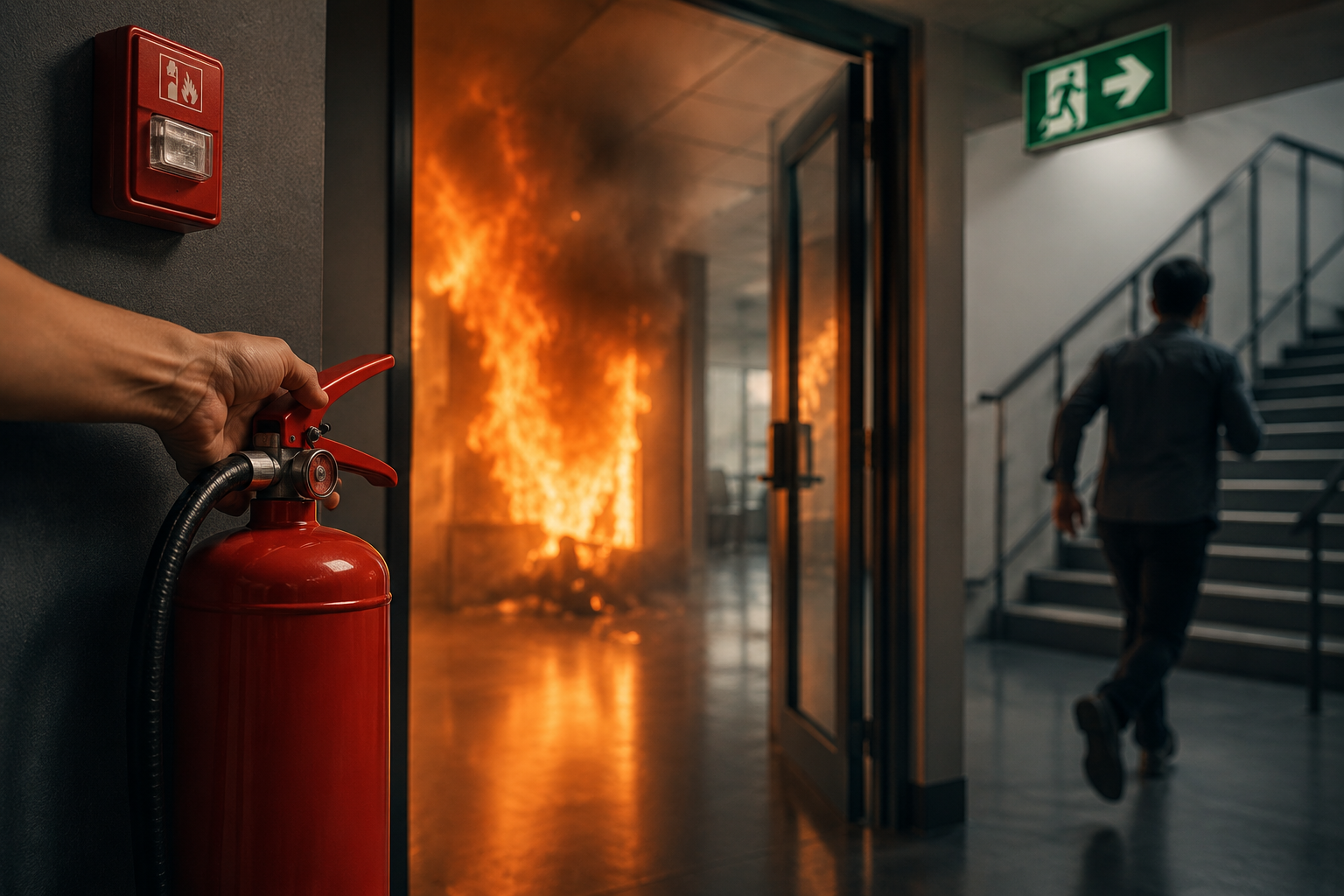
A fire extinguisher can be effective if the fire is small, contained, and there is a clear escape route available.
However, many people underestimate how quickly a fire can grow.
If the fire is spreading, producing heavy smoke, or creating unsafe conditions, evacuation should always take priority.
Fire extinguishers are intended for early-stage incidents, not large or uncontrolled fires.
Personal safety should never be sacrificed while attempting to save property.
How to Use a Fire Extinguisher: Remember the P.A.S.S. Method
If a fire is small and contained, and you have been trained to use a fire extinguisher, the widely recognised P.A.S.S. method can help you remember the basic steps:
P – Pull the safety pin.
A – Aim the nozzle at the base of the fire.
S – Squeeze the handle to release the extinguishing agent.
S – Sweep the nozzle from side to side until the fire appears to be extinguished.
Even when using a fire extinguisher, always keep a safe distance and ensure there is a clear escape route behind you. If the fire continues to grow, produces heavy smoke, or cannot be controlled within seconds, leave the area immediately and evacuate.
A fire extinguisher is designed to control small fires during their early stages. It should never be used as a substitute for evacuation when conditions become unsafe.
What If You Cannot Get Out?
Although rare, some people may become trapped during a fire emergency.
If evacuation is not possible:
- Move to a room with a door and window if available.
- Close the door to reduce smoke entry.
- Seal gaps under the door with cloth or towels if possible.
- Contact emergency services and provide your exact location.
- Signal for help from a window.
Most importantly, stay low and avoid unnecessary exposure to smoke.
Emergency responders are trained to locate and assist trapped occupants.
Common Mistakes That Put People at Risk
In real emergencies, certain mistakes appear repeatedly.
These include:
- Ignoring alarms
- Delaying evacuation
- Using elevators
- Returning for personal belongings
- Attempting to fight large fires
- Blocking exits
- Assuming someone else has called for help
Awareness of these common errors can help people make safer decisions during stressful situations.
Why Fire Safety Systems Matter
During a fire emergency, many of the most important safety measures happen behind the scenes.
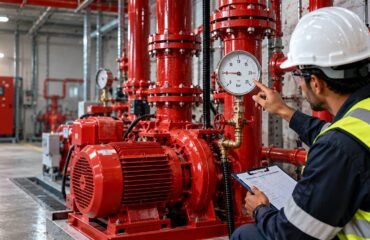
Smoke detectors identify danger early. Fire alarm systems alert occupants. Emergency exit lighting helps guide evacuation routes. Sprinklers and fire suppression systems help control fire growth before emergency responders arrive.
These systems are designed to work together to create valuable time for evacuation and emergency response.
This is one reason many organisations work with a trusted fire safety company in Dubai to ensure fire protection equipment remains operational and properly maintained.
Regular inspections, testing, and maintenance help ensure these systems perform when they are needed most.
Preparation Matters More Than Most People Realise
The safest buildings are not simply the ones with the newest technology.
They are often the buildings where people know what to do.
Employees who understand evacuation routes, occupants who recognise alarm signals, and organisations that conduct regular fire drills are generally better prepared to respond during emergencies.
Many fire protection companies in Dubai encourage ongoing training because familiarity reduces confusion when real emergencies occur.
Working with an experienced fire safety company in Dubai also helps ensure that fire alarms, emergency lighting, fire extinguishers, and other critical systems remain ready for use.
Final Thoughts
A fire can develop with little warning, and the first few minutes often matter the most.
Knowing how to respond calmly, raise the alarm, evacuate safely, and avoid common mistakes can help protect both yourself and others during an emergency.
While no one can predict when a fire may occur, preparation makes a significant difference. Well-maintained fire safety systems, regular training, and clear emergency procedures all contribute to a safer environment.
This is why businesses continue to rely on experienced fire safety companies in Dubai to maintain fire protection systems and support emergency preparedness across commercial buildings.
When every second counts, preparation remains one of the strongest forms of protection.