Warehouses are designed to store valuable inventory, support continuous operations, and keep supply chains moving efficiently. However, they also present unique fire risks. High storage racks, combustible packaging materials, electrical equipment, forklifts, and large open spaces can allow a small fire to escalate rapidly if it is not controlled in time.
While portable fire extinguishers are an important first-response tool, they are only effective during the earliest stages of a fire. Once flames begin spreading through storage racks or across large warehouse spaces, a professionally designed fire suppression system becomes the primary line of defence.
For businesses looking for dependable Fire Fighting Services Dubai, investing in a reliable fire suppression system is not just about meeting safety requirements—it’s about protecting people, assets, and business continuity.
Why Warehouses Face a Higher Risk of Fire
Compared to offices or retail spaces, warehouses contain conditions that allow fires to grow faster and become more difficult to control.
Some of the most common warehouse fire hazards include:
- High-density pallet storage
- Cardboard boxes and packaging materials
- Plastic products and combustible goods
- Electrical equipment and machinery
- Forklift battery charging stations
- Welding and maintenance activities
- Human error and poor housekeeping
One of the biggest challenges is the chimney effect. Tall storage racks create narrow vertical spaces that allow heat and flames to travel upwards rapidly, helping fires spread through multiple storage levels in a short period.
Large warehouse buildings also have high ceilings, meaning smoke and heat may take longer to reach detection devices if the facility is not equipped with a properly designed fire detection and suppression system.
What Is a Fire Suppression System?
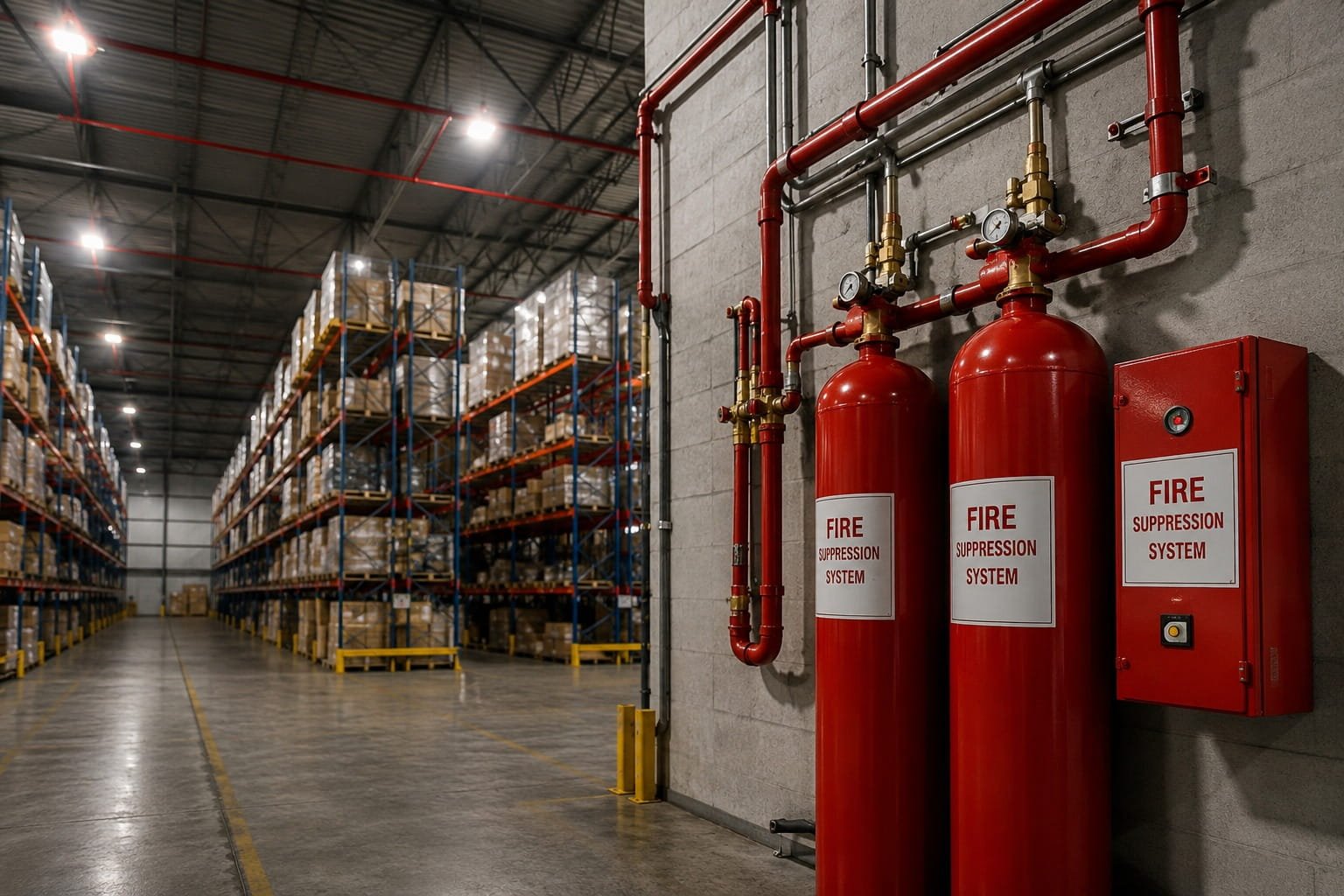
A fire suppression system is an automatic fire protection solution designed to detect and control a fire before it spreads throughout the building.
Unlike portable extinguishers that rely on human intervention, fire suppression systems activate automatically when a fire reaches a specific temperature or when connected detection devices identify a fire emergency.
Depending on the warehouse and the materials being stored, systems may include:
- Water sprinkler systems
- ESFR (Early Suppression Fast Response) sprinkler systems
- In-rack sprinkler systems
- Foam suppression systems
- Clean agent systems for sensitive equipment
- CO₂ suppression systems for specialised hazards
Selecting the right system depends on factors such as ceiling height, storage configuration, commodity type, and operational risks.
How Fire Suppression Systems Protect Warehouses
1. Protect Employees and Visitors
Employee safety should always be the first priority.
An automatic fire suppression system activates within the early stages of a fire, helping reduce heat, smoke, and flame growth. This provides occupants with valuable time to evacuate safely while reducing exposure to dangerous conditions.
Early suppression can make a critical difference in protecting lives during an emergency.
2. Protect Valuable Inventory
Warehouse inventory often represents a significant financial investment.
Whether storing electronics, food products, pharmaceuticals, textiles, or industrial equipment, even a small fire can result in extensive losses if it spreads unchecked.
A reliable suppression system controls the fire near its point of origin, helping minimise damage to stock and reducing the likelihood of total inventory loss.
3. Reduce Business Downtime
A warehouse fire affects more than the building itself.
It can interrupt operations, delay deliveries, disrupt supply chains, and impact customer confidence. Recovery may take weeks or even months if major fire damage occurs.
By controlling fires quickly, fire suppression systems help businesses resume operations faster while reducing costly downtime.
4. Prevent Fire from Spreading
Warehouse fires can grow rapidly because of high-piled storage and combustible materials.
Modern suppression systems are designed to attack fires before they spread across multiple storage racks or warehouse zones.
This early intervention limits fire growth, reduces structural damage, and gives emergency responders better control over the situation.
5. Support Regulatory Compliance
Fire protection systems also play an important role in meeting applicable fire safety regulations and insurance requirements.
Warehouse facilities should comply with relevant fire safety standards and local authority requirements, including UAE Civil Defence regulations where applicable.
Routine inspections, testing, and maintenance help ensure these systems remain ready to perform when needed.
Common Causes of Warehouse Fires
Understanding what commonly causes warehouse fires helps businesses take preventive action before an incident occurs. While every facility has unique operational risks, certain hazards are consistently identified across industrial and logistics environments.
Some of the most frequent causes include:
- Electrical faults resulting from overloaded circuits, damaged wiring, or poorly maintained equipment.
- Improper storage of flammable materials, including chemicals, fuels, solvents, or combustible packaging.
- Battery charging areas, particularly for electric forklifts, where overheating or equipment failure can create fire hazards.
- Hot work activities such as welding, cutting, or grinding carried out without appropriate fire safety precautions.
- Equipment overheating due to inadequate maintenance or mechanical failure.
- Poor housekeeping, where accumulated dust, waste materials, or blocked access routes increase fire risks and hinder emergency response.
Regular inspections, preventive maintenance, employee awareness, and properly designed fire protection systems work together to reduce the likelihood of these incidents and improve overall warehouse safety.
Choosing the Right Fire Suppression System
No two warehouses are exactly alike.
The most effective fire protection solution depends on several factors, including:
- Ceiling height
- Rack storage design
- Type of stored goods
- Presence of hazardous materials
- Battery charging areas
- Automated warehouse equipment
- Operational processes
For example, warehouses with high-piled storage may benefit from ESFR sprinkler systems, while facilities storing sensitive electronics may require clean agent suppression systems that avoid water damage.
A professional fire risk assessment helps determine the most suitable solution for each facility.
The Importance of Regular Inspection and Maintenance
Installing a fire suppression system is only the first step. Like any critical safety system, it must be inspected, tested, and maintained regularly to ensure reliable performance during an emergency.
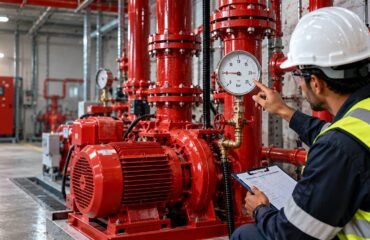
Routine maintenance helps identify issues such as damaged sprinkler heads, blocked pipework, faulty valves, inadequate water pressure, or worn system components before they affect system operation. Regular inspections also verify that changes to warehouse layouts, storage configurations, or operations have not compromised the effectiveness of the fire protection system.
Scheduled maintenance carried out by qualified fire protection professionals helps improve system reliability, extends equipment life, and supports compliance with applicable fire safety regulations. More importantly, it provides confidence that the system will perform as intended when every second matters.
Why Professional Fire Protection Matters
Installing a fire suppression system is not simply about placing sprinklers throughout a building. Proper system design requires careful planning, engineering, testing, and ongoing maintenance to ensure reliable performance.
Working with an experienced provider of Fire Fighting Services Dubai ensures your warehouse receives a fire protection solution tailored to its specific risks, storage configuration, and operational requirements. Professional installation and regular maintenance also help keep systems compliant, dependable, and ready to respond during an emergency.
Fire Suppression as Part of a Complete Fire Protection Strategy
Although fire suppression systems play a vital role in controlling fires, they are most effective when integrated into a comprehensive fire protection strategy.
An effective warehouse fire safety programme typically combines multiple layers of protection, including:
- Fire detection and alarm systems
- Emergency lighting and exit signage
- Portable fire extinguishers
- Smoke management systems
- Clearly marked evacuation routes
- Employee fire safety training and emergency drills
- Routine inspection and maintenance of fire protection equipment
By combining prevention, early detection, automatic suppression, and emergency preparedness, warehouse operators can significantly reduce fire-related risks while protecting employees, assets, and business operations.
Conclusion
Warehouses face some of the highest fire risks due to large storage areas, combustible materials, and continuous operations. While portable fire extinguishers remain essential for managing small, incipient-stage fires, they cannot replace the protection offered by an automatic fire suppression system.
A well-designed suppression system helps protect employees, preserve valuable inventory, reduce business interruptions, and support compliance with fire safety regulations. Investing in professional Fire Fighting Services Dubai allows businesses to build a safer, more resilient warehouse capable of responding quickly when every second counts.
Proactive fire protection is more than a regulatory requirement—it’s an investment in the long-term safety, continuity, and success of your business.