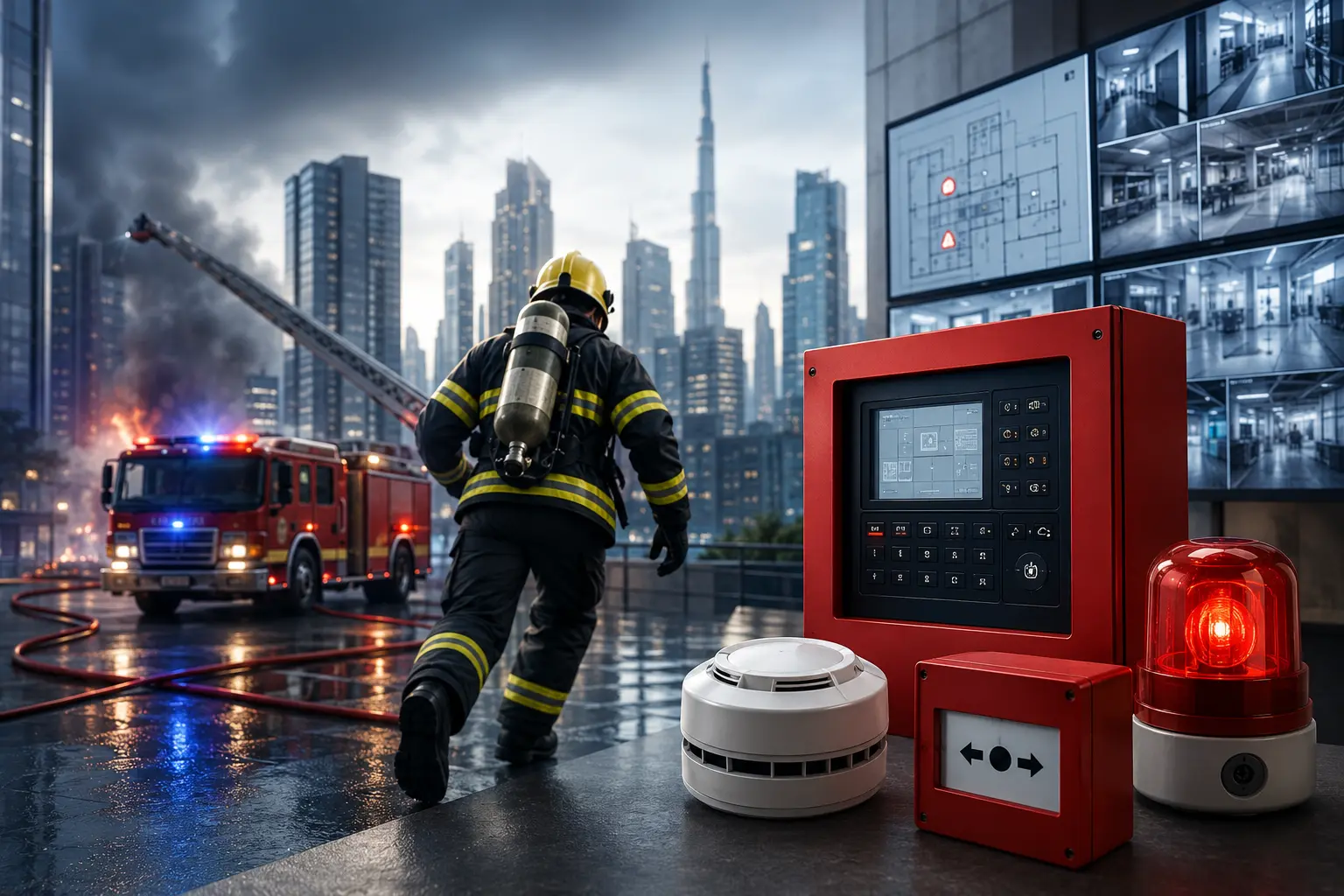
When businesses invest in fire protection systems, the first comparison often focuses on installation cost.
Which contractor offered the lower quote?
Which system appears more affordable upfront?
Which proposal reduces immediate project expenses?
But in real emergencies, the most important factor is rarely the installation price.
What matters most is how quickly a system detects danger, communicates the threat, supports emergency response, and helps control the situation before it escalates.
In commercial buildings across Dubai — where high-rise towers, industrial facilities, retail spaces, hotels, and mixed-use developments operate continuously — response time has become one of the most important factors in both safety and business continuity.
A lower installation cost may reduce short-term spending. But a delayed emergency response can create far greater losses through operational disruption, property damage, compliance issues, insurance exposure, and reputational impact.
This is why many businesses today work closely with experienced fire safety companies in Dubai that focus not only on installation quality, but also on fast system performance, emergency readiness, and long-term reliability.
Why Every Minute Matters During an Emergency
In any emergency, delays create compounding risks.
A small electrical fault can become a large fire within minutes. Smoke can spread rapidly through ventilation systems, corridors, lift shafts, and stairwells. In high-rise environments, delayed response can affect multiple floors before emergency teams even arrive.
The challenge becomes even greater in Dubai’s dense commercial infrastructure, where:
- High occupant volumes
- Large vertical buildings
- Complex MEP systems
- Continuous operations
- Heavy HVAC loads
…can accelerate operational disruption during emergencies.
In many situations, the speed of:
- Detection
- Alarm verification
- Notification
- Dispatch coordination
- Initial response
…has a greater impact on the outcome than the original installation budget itself.
The Hidden Cost of Choosing Systems Based Only on Price
Low-cost systems often appear attractive during procurement stages because they reduce initial project expenses.
But cheaper installations sometimes create long-term problems, such as:
- Slower alert routing
- Higher false alarm frequency
- Poor sensor accuracy
- Delayed fault detection
- Limited monitoring capability
- Slower maintenance response
Over time, these weaknesses can affect how quickly emergencies are identified and managed.
For commercial facilities, even a short delay may lead to:
- A larger fire spread
- Increased smoke damage
- Extended business interruption
- Occupant evacuation complications
- Greater operational downtime
In many cases, the financial damage caused by a delayed response becomes significantly higher than the money initially saved during installation.
This is one reason businesses increasingly partner with established fire safety company in Dubai providers that prioritise system performance, monitoring accuracy, and emergency responsiveness instead of only focusing on low upfront cost.
Dubai’s Commercial Environment Demands Faster Response
Dubai operates in a highly fast-paced commercial environment where operational continuity is critical.
A delay in emergency response inside:
- Corporate towers
- Hotels
- Warehouses
- Retail centres
- Industrial facilities
- Data centres
…can affect far more than the immediate incident area.
For example:
- Smoke migration may impact multiple floors
- Temporary shutdowns may interrupt business operations
- Tenant confidence may decline
- Compliance pressure may increase
- Recovery costs may escalate rapidly
In high-value properties, even a relatively minor emergency can create major operational and financial consequences if response time is delayed.
Because of this, many organisations now evaluate safety systems based on how effectively they reduce response latency rather than simply comparing installation quotations.
The Role of Smart Monitoring and Hassantuk Integration
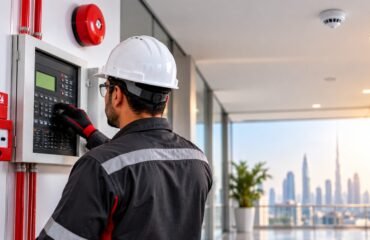
Modern fire protection systems in Dubai are increasingly connected through smart monitoring platforms such as Hassantuk.
These systems support:
- Real-time alarm monitoring
- Faster alert transmission
- Immediate fault notifications
- Direct communication with authorities
- Continuous system visibility
The goal is simple: reduce the time between incident detection and emergency response.
Buildings using outdated or poorly optimised systems may experience:
- Delayed verification
- Slower alert escalation
- Increased false alarms
- Reduced coordination efficiency
On the other hand, properly integrated systems help emergency teams respond faster with better situational awareness.
Several professional fire protection companies in Dubai now focus heavily on smart integration, real-time monitoring, and predictive system management because response speed has become a major operational priority.
Response Time Directly Affects Business Continuity
Many businesses think of fire safety as a compliance requirement. In reality, it is also a business continuity strategy.
Fast emergency response helps:
- Reduce downtime
- Limit operational disruption
- Protect inventory and infrastructure
- Reduce restoration costs
- Support faster recovery after incidents
For facilities operating around the clock, response efficiency directly influences how quickly normal operations can resume.
A delayed emergency response may result in:
- Temporary closures
- Extended repairs
- Revenue loss
- Supply chain interruption
- Tenant complaints
- Long-term operational disruption
This is why businesses increasingly prefer working with experienced fire safety companies in Dubai that are capable of maintaining strong emergency readiness alongside installation quality.
False Alarms and Delayed Verification Create Operational Problems
False alarms are another major issue in commercial environments.
Poor-quality sensors, incorrect system calibration, or weak monitoring infrastructure can trigger unnecessary alarms that disrupt daily operations and reduce occupant confidence over time.
Frequent false alarms may also:
- Interrupt tenant operations
- Trigger unnecessary emergency dispatches
- Increase maintenance pressure
- Affect compliance standing
Modern systems are designed to improve verification speed while reducing unnecessary activations.
Several advanced fire protection companies in Dubai now use addressable technologies and connected monitoring systems that help facilities identify faults more accurately and respond more efficiently.
Why Predictive Maintenance Is Becoming More Valuable
Traditional maintenance models often focus mainly on scheduled inspections and reactive repairs.
But modern commercial facilities are increasingly moving toward predictive maintenance supported by:
- Smart monitoring systems
- Connected alarm infrastructure
- Real-time diagnostics
- Digital reporting platforms
These systems can identify:
- Detector sensitivity drift
- Communication failures
- Environmental interference
- Early-stage equipment faults
This allows issues to be resolved before they create major downtime or emergency response delays.
Several leading fire safety company in Dubai providers now support predictive maintenance strategies designed to improve long-term system reliability and reduce operational risk.
The Real Return on Investment Is Measured in Time
The true value of a fire protection system is not measured only by installation cost.
It is measured by:
- How quickly danger is detected
- How fast alerts are transmitted
- How efficiently responders are coordinated
- How effectively damage is contained
In emergency situations, seconds influence outcomes.
A system that responds faster may:
- Save lives
- Reduce fire spread
- Protect business continuity
- Minimise financial loss
- Preserve tenant confidence
For commercial properties, the long-term value of faster response often far outweighs the short-term savings achieved through low-cost installation decisions.
Final Thoughts
In Dubai’s high-density commercial environment, emergency response speed has become just as important as the fire protection system itself.
While installation cost is a one-time expense, delayed response can create:
- Operational disruption
- Financial loss
- Compliance pressure
- Insurance complications
- Reputational damage
Businesses today are increasingly recognising that the real strength of a fire protection system lies not only in how it is installed, but in how quickly it performs when an emergency actually occurs.
Because in critical situations, the difference between control and catastrophe is often measured in minutes — not installation budgets.