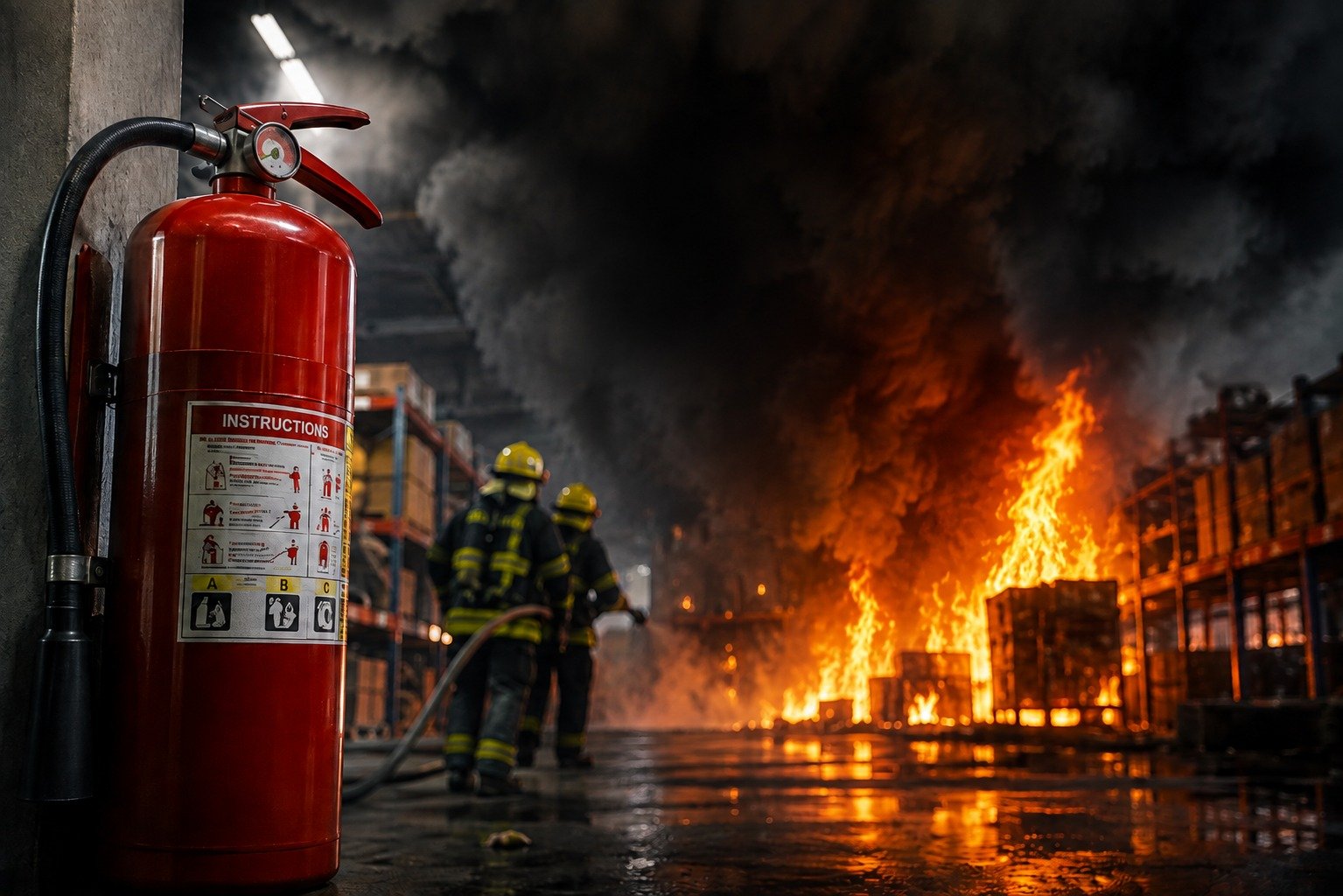
A fire extinguisher can make a big difference when a fire is caught in its early moments. A small flame can sometimes be controlled before it spreads, but that window of opportunity does not last long. As the fire grows, heat and smoke increase, flames spread faster, and using a portable extinguisher can quickly become unsafe.
That is why knowing when to use a fire extinguisher—and when to step away and evacuate—is just as important as having one available. Understanding its capabilities and limitations can help people respond more confidently and avoid turning a manageable situation into a much more serious emergency.
How Effective Are Fire Extinguishers?
Portable fire extinguishers can be highly effective when used against a small and contained fire. Industry data cited in the supplied research indicates success rates of approximately 80%–95% in incidents where extinguishers were used, although these figures mainly relate to manageable, early-stage fires.
An extinguisher is most effective when:
- The fire is still small and localised.
- The correct extinguisher is available.
- The fire has only recently started.
- Smoke and heat are manageable.
- The user has a clear escape route.
- The extinguisher is properly maintained.
- The person using it knows how and when to operate it.
This makes an extinguisher an important first-response tool, rather than a replacement for a complete fire protection system.
Why Do Extinguishers Become Ineffective During Major Fires?
As a fire grows, the conditions can quickly exceed the capabilities of a portable extinguisher.
Limited Discharge Capacity
A portable extinguisher contains a limited quantity of extinguishing agent and operates for only a short period. This may be enough to suppress a small wastebasket, equipment, or localised cooking fire, but it is unlikely to control flames that have spread across a room or storage area.
Extreme Heat
A developing fire produces increasing levels of radiant heat. Once conditions become too hot, approaching the flames can expose the operator to serious burns and make effective discharge impossible.
Heavy Smoke
Smoke can spread rapidly through commercial and industrial spaces. Reduced visibility, toxic gases, and breathing difficulties can make it unsafe for occupants to remain in the area, even if the flames themselves appear manageable.
Rapid Fire Spread
Fire can move beyond what is immediately visible through ceilings, wall cavities, cable trays, ducts, storage racks, and combustible materials. A portable extinguisher cannot reliably address fire that has already spread into concealed areas.
Reignition
Suppressing visible flames does not always mean the fire is completely extinguished. Heat can remain within furniture, insulation, machinery, packaging, or other combustible materials, creating a risk of reignition.
Extinguisher type |
Common Examples |
Suitable Protection |
|---|---|---|
Class A |
Paper, wood, cardboard, textiles |
Water, foam or suitable dry chemical |
Class B |
Petrol, diesel, solvents |
Foam or dry chemical |
Class C |
Panels, machinery, equipment |
CO₂ or suitable non-conductive agent |
Class K |
Commercial fryers |
Wet chemical |
Class D |
Combustible metals |
Specialist dry powder |
Water should never be used on energised electrical equipment, burning flammable liquids, or cooking oil. Using an unsuitable extinguishing agent can spread the fire or create additional hazards.
When Should You Use a Fire Extinguisher?
An extinguisher should only be considered when the fire is small, contained, and safe to approach.
Before attempting to use one, make sure:
- The alarm has been raised.
- Other occupants have been warned.
- Emergency services have been contacted.
- You have the correct extinguisher.
- Smoke and heat remain manageable.
- You have a clear escape route behind you.
- You can immediately retreat if conditions change.
For an appropriate early-stage fire, the PASS method can be used:
.
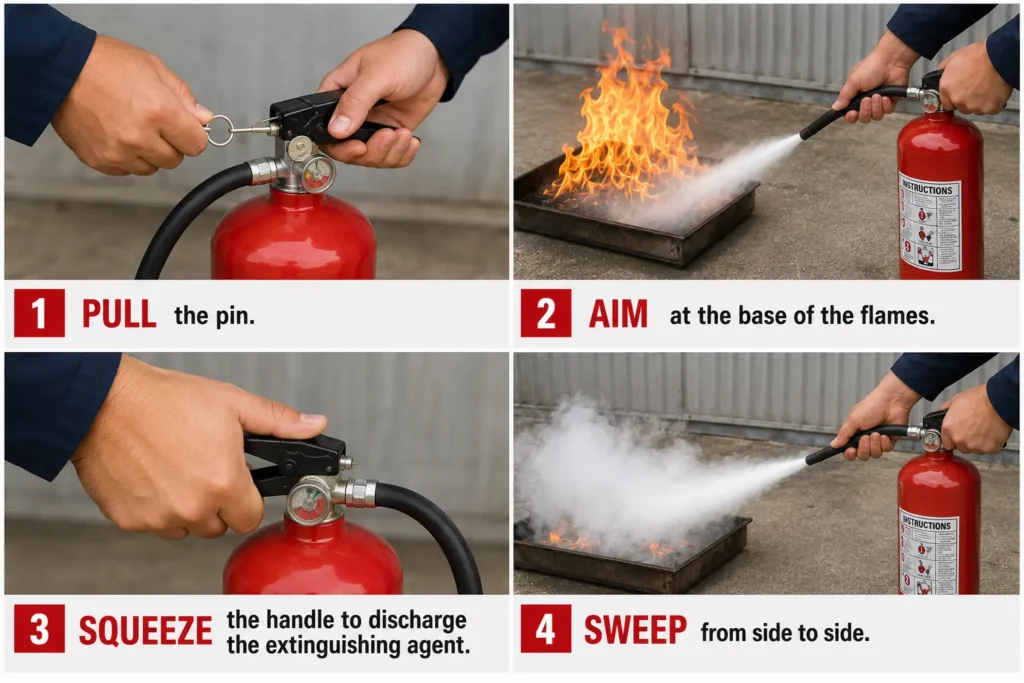
If the fire grows, smoke becomes heavy, the extinguisher becomes empty, or the escape route is threatened, stop immediately and evacuate.
What Happens During a Major Fire?
Once a fire develops beyond its initial stage, portable extinguishers become only one small part of the overall response.
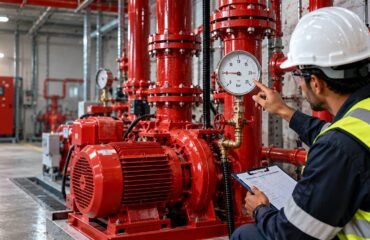
Commercial and industrial facilities require a layered fire protection strategy that can include:
- Fire detection and alarm systems
- Automatic sprinkler systems
- Fire suppression systems
- Fire-rated doors and compartmentation
- Emergency lighting and exit signage
- Fire pumps, hydrants and hose reels
- Evacuation procedures and drills
- Trained emergency-response personnel
- Professional firefighting support
Automatic suppression systems are particularly valuable because they can respond to developing fires without waiting for someone to locate and operate a portable extinguisher.
For businesses in Dubai, working with an experienced firefighting company in Dubai can help ensure that portable extinguishers are supported by appropriate detection, suppression, evacuation, inspection, and maintenance measures.
How Businesses Can Improve Extinguisher Effectiveness
Simply installing extinguishers is not enough. Facility managers should ensure that they remain:
- Clearly visible
- Easily accessible
- Correctly positioned
- Properly charged
- Free from corrosion or physical damage
- Appropriate for the surrounding fire hazards
- Regularly inspected and professionally maintained
Employees should also know where extinguishers are located and understand the difference between a fire that can potentially be tackled and one that requires immediate evacuation.
Regular training and emergency drills are equally important. Employees should know how to raise the alarm, reach a safe assembly point, and respond without putting themselves or others at unnecessary risk.
Conclusion
Fire extinguishers can be highly effective at controlling small fires during their early stages, potentially preventing them from becoming major emergencies. Their effectiveness, however, decreases rapidly as fire size, heat, smoke, and spread increase.
A portable extinguisher should never be viewed as a solution for a fully developed fire. Effective fire safety depends on multiple layers working together—from early detection and alarms to automatic suppression, safe evacuation, professional firefighting, and regular maintenance.
For businesses, the goal should not simply be to have an extinguisher, but to ensure the entire fire protection system is prepared to respond when it matters most. A professional fire fighting company in Dubai can help businesses assess their risks and implement the appropriate protection measures for their facilities.