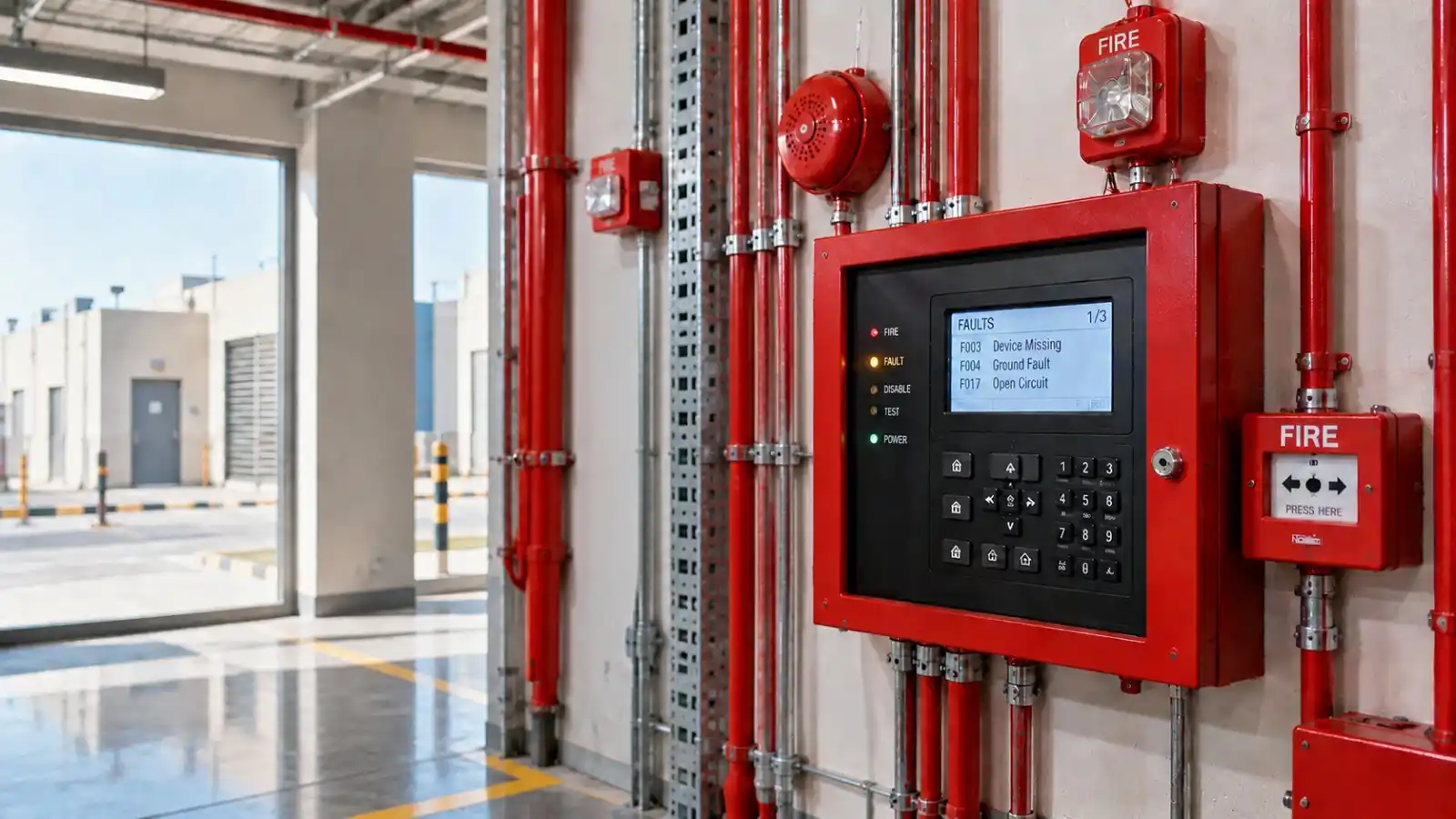
A fire alarm panel plays a central role in a building’s fire protection system. It receives signals from detectors, manual call points and other connected devices, helping occupants and facility teams respond to potential fire incidents. When a fault appears on the panel, it indicates that part of the system may not be operating as intended. Although a fault does not always signal a fire, it should be addressed quickly because it may interfere with fire detection, occupant warnings or system monitoring.
This guide explains common fire alarm panel fault messages, what they may indicate and the appropriate steps to take. It further explains how routine servicing and Fire alarm AMC in Dubai can help uncover faults at an early stage, reducing the risk of more serious system failures.
Understanding Fire Alarm Panel Signals
A fire alarm control panel generally displays different types of signals. Knowing the difference helps staff determine the appropriate response.
- Alarm: Indicates that a detector, manual call point or another initiating device has reported a potential fire condition. Follow the building’s emergency response procedure immediately.
- Trouble or fault: Indicates a technical problem, such as a power supply issue, damaged wiring, a communication failure or a malfunctioning device.
- Supervisory: Signals an unusual condition in a monitored system component that needs attention, such as a valve position being monitored by the fire protection system.
The panel may use indicator lights, audible signals and text messages to communicate these conditions. The exact display and terminology depend on the manufacturer, model and system configuration.
Common Fault Messages and What They May Indicate
AC Power Loss or Mains Failure
This warning usually appears when the fire alarm panel loses its regular power supply. The system may switch to its standby batteries, depending on their condition and the panel’s design.
Possible causes include a power outage, a tripped circuit breaker, a faulty power supply or an electrical connection problem.
Check whether the building has experienced a power interruption and report the fault to the authorised maintenance team. Do not assume the system is fully protected simply because the panel remains switched on; its backup power capacity may be limited.
Low Battery or Battery Charger Trouble
A low-battery warning indicates that the standby batteries may not have sufficient charge. A charger fault suggests that the panel may not be charging the batteries correctly.
Battery deterioration, loose terminals, damaged connections and charger failure can contribute to these problems. In the UAE, high ambient temperatures can also affect battery service life, particularly where equipment rooms are poorly ventilated.
Arrange for a qualified technician to inspect the batteries, charging circuit and relevant connections. Battery condition and capacity should be assessed according to the manufacturer’s instructions and applicable maintenance requirements.
Open Circuit or Open Loop
An open-circuit fault means the panel has detected an interruption in an electrical circuit or communication loop. Depending on the system design, this may affect one or more connected devices.
Common causes include disconnected wiring, loose terminals, damaged cables, missing devices or damage during construction and fit-out work.
Record the exact fault message and the affected circuit, loop or zone. An authorised technician should trace the circuit and identify the interruption. Do not attempt to reconnect or alter fire alarm wiring without the appropriate training and authorisation.
Ground or Earth Fault
A ground or earth fault occurs when an electrical conductor unintentionally connects to earth or another grounded component. This can result from damaged cable insulation, moisture, contaminated equipment or a defective device.
Dust, humidity and coastal conditions may contribute to equipment deterioration in some UAE environments, making appropriate inspection and maintenance particularly important.
Report the fault and arrange a technical investigation. Avoid opening the panel or disconnecting wiring to locate the problem unless this is performed by a qualified person following the approved procedure.
Device Missing or Communication Failure
Addressable fire alarm systems communicate with individual devices, allowing the panel to identify specific detectors, call points, modules or other components. A device-missing or communication fault may indicate that the panel can no longer communicate with a connected component.
Possible causes include a damaged detector, disconnected wiring, an incorrect device address, a failed module or a problem with the communication loop.
Note the device address, location and complete message shown on the panel. The maintenance technician can compare these details with the approved device schedule and investigate the affected circuit.
Dirty Detector or Maintenance Required
Certain fire alarm systems can detect when detectors are dirty or nearing the point where maintenance is required. Dust particles, insects, cobwebs and debris left behind by drilling or renovation activities may interfere with the proper functioning of detectors.
This issue is especially relevant in buildings undergoing frequent fit-outs or operating in dusty environments.
Have a qualified technician assess the detector and clean or replace it as necessary, following the manufacturer’s guidelines. Do not cover detectors, disable them or use unsuitable cleaning methods to clear the warning.
Communication or Monitoring Trouble
A communication fault may indicate that the panel cannot transmit information to a remote monitoring service or another connected system. The connection method varies by installation and may involve a landline telephone, an IP-based network, a mobile network or another approved communication channel.
Network interruptions, damaged communication cables, equipment faults or configuration issues may cause this warning. Contact the authorised maintenance provider and, where applicable, the monitoring service.
Internal Panel or Processor Fault
Messages relating to the processor, memory, internal communication or display may indicate a problem within the control panel itself. The cause could involve an internal component failure, configuration issue or another manufacturer-specific condition.
Contact a qualified service technician or the manufacturer’s authorised support channel. Follow the recommended procedure for the specific panel model rather than attempting an unapproved reset or configuration change.
How to Respond When a Fault Appears
A consistent response helps facility teams manage faults without creating additional risks.
- Check the signal type. Confirm whether the panel indicates an alarm, supervisory condition or technical fault. If a fire is suspected, follow the emergency plan immediately rather than treating the situation as routine maintenance.
- Record the details. Note the exact message, time, affected zone or loop, device address and any related event history. A photograph of the display can help the maintenance team diagnose the problem.
- Notify the responsible personnel. Inform the designated facility manager, safety team or authorised maintenance provider according to the building’s procedures.
- Carry out only authorised visual checks. Staff may observe the panel and surrounding conditions if it is safe to do so. They should not open the control panel, alter wiring, change programming or bypass devices unless qualified and specifically authorised.
- Manage any impairment. If a fault reduces the protection available in an area, follow the approved impairment procedure. This may require notifying relevant stakeholders, arranging additional precautions or implementing a fire watch where required by the site procedure and applicable authority requirements.
- Verify repairs and document restoration. After corrective work, the authorised technician should complete the necessary tests, confirm the system has returned to its intended operating condition and record the fault, cause, repair and restoration details.
Acknowledging or silencing a panel buzzer does not mean the underlying fault has been repaired. A reset should only be performed by trained, authorised personnel in accordance with the system procedure.
Why Regular Fire Alarm Maintenance Matters in Dubai
Routine maintenance helps identify deteriorating batteries, contaminated detectors, wiring problems and communication failures before they remain unresolved for extended periods. For commercial buildings, residential developments, warehouses and industrial facilities, these checks form an important part of ongoing fire safety management.
A professional Fire alarm AMC in Dubai can provide a structured approach to inspections, testing, fault diagnosis and corrective maintenance. The precise scope and frequency should reflect the approved system design, manufacturer recommendations, applicable standards and current requirements of the relevant authority.
A suitable maintenance programme may include:
- Checking panel status, event logs and reported faults.
- Inspecting and testing detectors, manual call points, sounders and visual notification devices.
- Assessing standby batteries and power supply arrangements.
- Testing connected modules and interfaces according to the approved maintenance plan.
- Investigating recurring faults and identifying underlying causes.
- Maintaining service reports, test records and corrective-action documentation.
In the UAE, maintenance arrangements should support applicable Civil Defence requirements and the relevant provisions of the UAE Fire and Life Safety Code. NFPA 72 serves as a key reference for fire alarm and signalling systems, while EN 54 establishes standards for relevant fire detection and alarm equipment. The specific requirements depend on the project, system and applicable approvals.
How Technology Supports Better Fault Management
Modern fire alarm systems can provide more detailed information about device status, communication issues and recurring faults. Addressable systems, digital event logs and approved remote monitoring arrangements can help maintenance teams identify where an issue has occurred and prioritise their investigation.
Digital maintenance records and building asset registers can also help facility managers track repeated faults, previous repairs and component replacement history. Reviewing these trends may reveal recurring problems linked to environmental conditions, renovation work or ageing equipment.
However, monitoring technology does not replace physical inspections, functional testing or the maintenance procedures required for the installed system. Accurate records and qualified technical support remain essential.
Conclusion
Fire alarm panel fault messages provide important information about the condition of a building’s fire protection system. Whether the issue involves power supply, standby batteries, wiring, detectors, communication or internal panel components, identifying the cause and arranging the correct repair helps maintain system reliability.
Facility managers should record faults accurately, follow established response procedures and avoid unauthorised adjustments. Partnering with a qualified fire protection service provider helps ensure that faults are properly assessed, repairs are thoroughly tested, and maintenance documentation remains current.