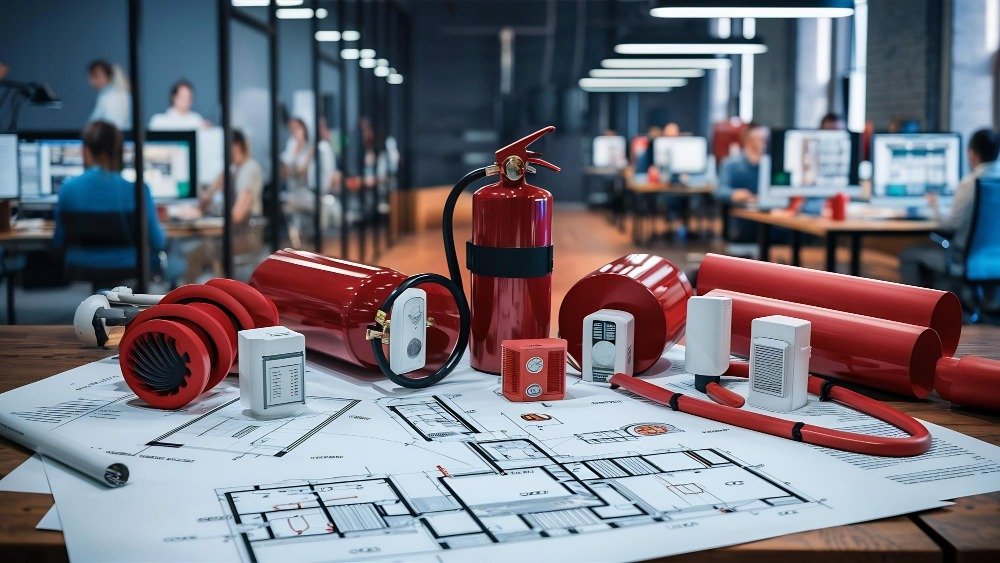
Seasonal Fire Safety Planning in the UAE: Preparing Large Facilities for Peak Summer Risk.
In the UAE, summer is not just a change in season—it is a stress test for buildings. Prolonged heat, sustained electrical loads, and round-the-clock cooling place extraordinary pressure on infrastructure. For large facilities such as commercial towers, warehouses, data centres, industrial plants, and mixed-use developments, summer consistently represents the highest fire-risk period of the year.
Seasonal fire incidents rarely stem from a single failure. They are usually the result of overloaded systems, deferred maintenance, and gaps in preparedness that only surface when temperatures peak. This is why Seasonal Fire Safety Planning in UAE has become a critical operational discipline rather than a checklist exercise.
This guide explains how large facilities can prepare for peak summer risk through proper planning, compliance alignment, and system readiness—before minor vulnerabilities escalate into major incidents.
Why Summer Fire Risk Is Different in the UAE
Extreme ambient temperatures—often exceeding 45°C—create conditions that accelerate system fatigue. Cooling systems operate continuously, electrical networks remain under sustained load, and internal heat accumulates in areas that are not always visible during routine inspections.
In large buildings, these stresses interact in complex ways. HVAC systems running at maximum capacity increase electrical demand, which raises cable temperatures and stresses distribution boards. Storage areas with limited ventilation can trap heat, increasing the risk of thermal instability in batteries, pressurised containers, and flammable materials. Along coastal zones, humidity adds another variable, affecting sensors, panels, and wiring reliability.
Summer planning is therefore not about responding to fire—it is about anticipating where heat, load, and time will intersect.
Infrastructure Readiness: The First Line of Defence
Effective seasonal planning starts with infrastructure that can withstand prolonged demand.
HVAC systems are a critical focus. Poorly maintained units do not only fail mechanically; they become ignition risks due to overheated motors, worn insulation, and compromised control panels. Pre-summer inspections should prioritise airflow balance, electrical connections, and heat dissipation around plant rooms.
Electrical systems require equal attention. Thermal expansion during peak months can loosen terminals and expose arc-fault risks. Infrared scanning of distribution boards and critical circuits is increasingly used by large facilities to identify hotspots before failures occur.
Fire pumps and water supply systems must also be tested under load. A pump that starts successfully in mild conditions may fail when ambient temperatures rise. Monthly functional checks and annual full-scale testing are essential to ensure pressure and flow remain reliable throughout summer.
Compliance Expectations in 2026: What Has Changed
UAE fire safety compliance continues to evolve, with 2026 placing stronger emphasis on documentation, verification, and system integration.
Fire doors are no longer treated as static assets. Large facilities are now expected to maintain detailed records covering certification, inspection history, and ongoing maintenance. These “fire door dossiers” are routinely reviewed during inspections.
Emergency exit lighting remains a major compliance focus. Systems must provide a minimum average illumination of 10.8 lux along escape routes and operate for at least three hours on backup power. Low-level guidance has gained importance, particularly in high-rise buildings, where smoke can obscure overhead signage. Photoluminescent markers along stair edges, handrails, and floor skirting are increasingly considered essential rather than optional.
Regulators also expect closer alignment between detection, alarm signalling, and emergency lighting response—especially in complex buildings where phased evacuation strategies are used.
Managing Summer-Specific Hazards
Large facilities often store materials that behave differently under heat stress. Flammable liquids, aerosols, lithium-ion batteries, and compressed gases become significantly more hazardous when exposed to sustained high temperatures.
Seasonal planning should therefore include a storage risk review. Materials may need relocation to shaded or climate-controlled areas during summer months. Ventilation strategies should be reassessed, particularly in loading bays, plant rooms, and electrical enclosures.
Equally important is human behaviour. Temporary cooling equipment, unauthorised electrical extensions, and ad-hoc modifications during peak months frequently introduce new risks. Clear summer-specific operating procedures help reduce these exposures.
Staff Preparedness and Operational Discipline
Even the most advanced systems depend on people responding correctly. Summer conditions increase stress levels, fatigue, and evacuation difficulty—especially in large sites with long travel distances.
Fire drills should not be treated as routine compliance tasks. In high-occupancy or industrial environments, drills must reflect summer realities, including heat exposure, slower movement, and the need for shaded or cooled assembly points.
Facilities are increasingly assigning trained fire wardens across shifts, ensuring guidance is available even during off-peak hours. Clear role allocation reduces confusion and supports orderly evacuation when visibility and comfort are compromised.
Technology and Monitoring: Moving from Reactive to Predictive
Large UAE facilities are steadily moving toward smarter monitoring—not as a trend, but as a practical necessity. Centralised monitoring platforms allow real-time visibility into alarms, emergency lighting status, and system faults across large estates.
Thermal monitoring and automated alerts help identify overloaded circuits or degrading components early. These tools are particularly valuable during summer, when failures escalate faster and repair windows are limited.
While technology does not replace inspections, it significantly reduces reliance on manual checks and improves audit readiness—an advantage when inspections increase during peak risk periods.
The Business Case for Seasonal Fire Safety Planning
For large organisations, fire safety planning is no longer only about regulatory compliance. A single summer-related incident can result in operational shutdowns, insurance disputes, and long-term reputational damage.
Structured seasonal planning protects continuity. It reduces unplanned downtime, improves inspection outcomes, and demonstrates due diligence to insurers and stakeholders. This is why many organisations work closely with experienced fire protection companies in Dubai to review summer readiness well before temperatures peak.
Engaging a qualified fire safety company in dubai ensures inspections, testing, and documentation meet current Civil Defence expectations—particularly for complex or high-risk facilities.
Final Thoughts
Summer in the UAE is predictable. Fire incidents do not need to be.
Seasonal fire safety planning is about recognising that extreme heat changes how buildings behave, how systems age, and how people respond. Large facilities that prepare early—by reviewing infrastructure, tightening compliance, training staff, and monitoring intelligently—enter peak summer months with control rather than concern.
For businesses responsible for large assets, proactive planning is not an added cost. It is a safeguard against the most avoidable fire risks of the year—and a clear signal of operational maturity.