Dubai’s approach to fire safety is defined by strict regulation and consistent enforcement. Every commercial property, residential tower, warehouse, or public facility must follow the UAE Fire and Life Safety Code of Practice, overseen by Dubai Civil Defence (DCD).
Compliance with this framework is required before a building can be occupied or used for business. Fire protection systems must therefore pass multiple technical checks, documentation reviews, and on-site inspections before approval is granted.
Within this process, fire safety installation in Dubai becomes a decisive stage. Installation is not simply the placement of alarms or sprinklers during construction. It is a regulated procedure that ensures every element of the fire protection system performs according to approved designs and safety standards.
Buildings where systems are installed accurately and tested properly tend to progress smoothly through inspections. Where installation deviates from approved specifications, delays and compliance issues often follow.
Why Installation Determines Compliance Outcomes
Fire safety compliance in Dubai is based on verification rather than assumption. Authorities assess not only whether systems are present in a building, but whether they were installed exactly as required by the approved fire safety design.
This requirement connects installation directly to the Civil Defence Certificate of Completion, which is mandatory before occupancy approval is issued.
Even small discrepancies between approved plans and installed systems can interrupt this process. A smoke detector positioned outside its required coverage zone or an emergency exit sign placed incorrectly may be enough to trigger a correction notice during inspection.
For developers and building owners, this means installation quality directly influences whether a project moves forward or faces additional review.
The Design Stage: Where Compliance Begins
The foundation of compliance is established during the design phase. Before any installation work starts on site, detailed fire protection drawings must be submitted through the Dubai Civil Defence e-services platform.
These submissions outline how the building’s fire protection systems will function and how they align with the UAE Fire and Life Safety Code.
Design documentation normally includes:
- Detector placement and alarm coverage areas
- Sprinkler distribution and discharge density
- Fire pump capacity and hydrant locations
- Emergency exit lighting and evacuation signage
Each building category has its own technical requirements. A high-rise residential tower, for example, requires a different protection strategy than an industrial warehouse or hospital facility.
Once these drawings receive approval, they become the reference for all installation work carried out on site.
Equipment Approval and Certification Requirements
Compliance in Dubai also depends heavily on the equipment used in fire protection systems.
Dubai Civil Defence maintains an approved product registry, and every component installed must meet internationally recognised testing standards. Certifications such as UL, FM Global, and LPCB confirm that equipment has been evaluated for performance under fire conditions.
This requirement applies to both visible and hidden components within the system. Typical examples include:
- Smoke and heat detectors
- Fire alarm control panels
- Sprinkler heads and suppression systems
- Fire-rated cables and conduits
- Emergency lighting fixtures and exit signs
Each product must carry a Certificate of Conformity (CoC) verifying that it meets regulatory approval requirements.
If equipment used during installation does not appear on the approved list, inspectors may require replacement before the building can obtain certification.
Integrating Active and Passive Fire Protection
Modern fire safety systems operate through several protective layers working together. Fire safety installation in Dubai must therefore ensure proper coordination between different types of fire protection measures.
Active protection systems respond directly to fire events. Smoke detectors, alarm systems, sprinklers, and suppression systems are designed to detect and control fire in its early stages.
Passive protection systems help limit the spread of fire and smoke. Fire-rated walls, doors, ceilings, and protective coatings create compartments within the building, slowing the movement of heat and smoke.
When installed correctly, these systems interact automatically. For instance, an activated alarm can trigger magnetic door releases so that fire doors close and isolate the affected area.
This coordination helps maintain clear escape routes and supports safer evacuation during emergencies.
Hassantuk and Real-Time Fire Monitoring
Dubai’s fire safety infrastructure has evolved significantly with the introduction of the Hassantuk monitoring network.
Hassantuk links building alarm systems directly to Civil Defence command centres. When a fire alarm is activated, signals are transmitted automatically through a secure communication device connected to the alarm panel.
This direct communication allows emergency responders to receive alerts almost immediately, reducing response times and improving incident management.
During installation, the alarm system must be configured to integrate correctly with the Hassantuk transmitter. Reliable signal transmission is essential, as the system is designed to operate continuously as part of the national fire monitoring network.
Testing and Inspection Before Approval
After installation is completed, the building enters the verification phase.
Several technical checks confirm whether systems function as required under real operating conditions.
Functional Testing
Fire pumps, suppression systems, alarm panels, and emergency lighting are tested to confirm operational performance.
Site Inspection
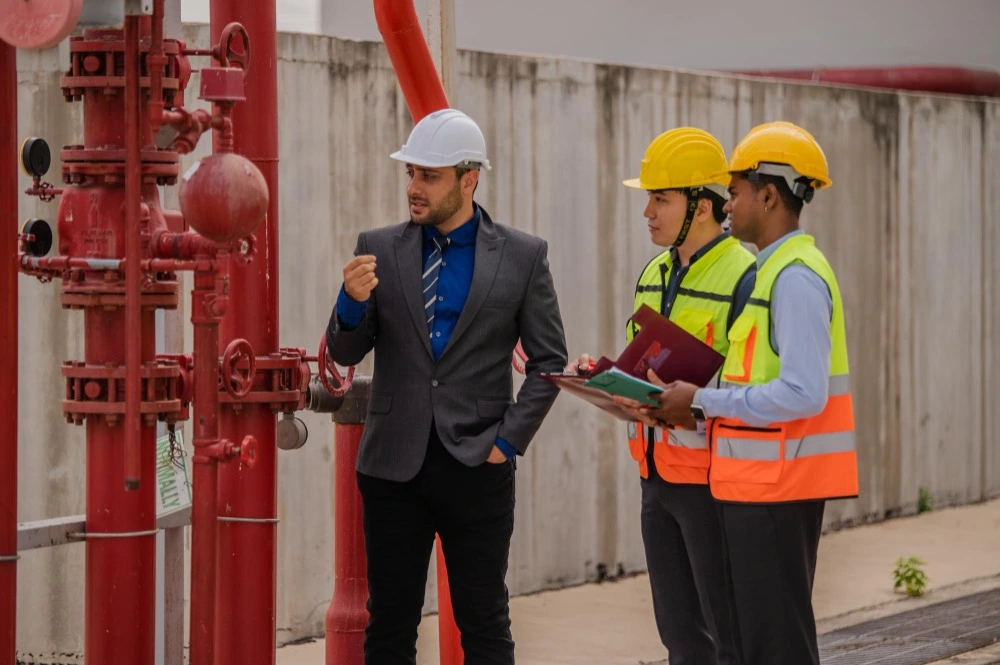
Civil Defence inspectors assess whether installations match the approved design drawings and comply with the Fire and Life Safety Code.
Certification Review
Product documentation, equipment approvals, and technical records are evaluated to confirm regulatory compliance.
Only after these stages are successfully completed can the building receive its Civil Defence approval.
Projects where installation closely follows approved drawings typically move through inspection stages more efficiently.
Compliance as an Ongoing Responsibility
Obtaining Civil Defence approval does not mark the end of fire safety obligations.
Fire protection systems must remain operational throughout the building’s lifespan. Regular inspections, functional tests, and equipment servicing are required to ensure systems continue performing as designed.
Maintenance records and testing reports often form part of compliance audits carried out during the operational life of a building.
To maintain inspection schedules and documentation requirements, building owners frequently coordinate with a fire and safety company in Dubai responsible for system maintenance and compliance monitoring.
Consistent maintenance ensures that the installed systems continue meeting regulatory expectations long after construction is completed.
The Operational Value of Proper Installation
Beyond regulatory compliance, accurate installation also influences operational resilience.
Buildings with properly installed and maintained fire protection systems typically experience fewer disruptions during inspections, insurance assessments, and facility audits. Clear documentation and reliable system performance support both safety management and business continuity.
In contrast, systems installed incorrectly or without proper certification may lead to repeated inspections, corrective work, or complications during incident investigations.
In a city where buildings operate at high density and scale, dependable fire protection systems remain essential for safeguarding both occupants and assets.
Final Thoughts
Fire safety compliance in Dubai is built on a structured sequence of design approval, certified equipment, professional installation, and ongoing maintenance.
Within that process, fire safety installation in Dubai plays a central role. Correct installation ensures that fire detection, suppression, containment, and evacuation systems function together and meet the standards required by Dubai Civil Defence.
When systems are installed according to approved designs and verified through inspection, buildings are better positioned to pass regulatory reviews and operate safely throughout their lifecycle.
Fire safety ultimately depends on preparation, precision, and consistency—long before an emergency ever occurs.