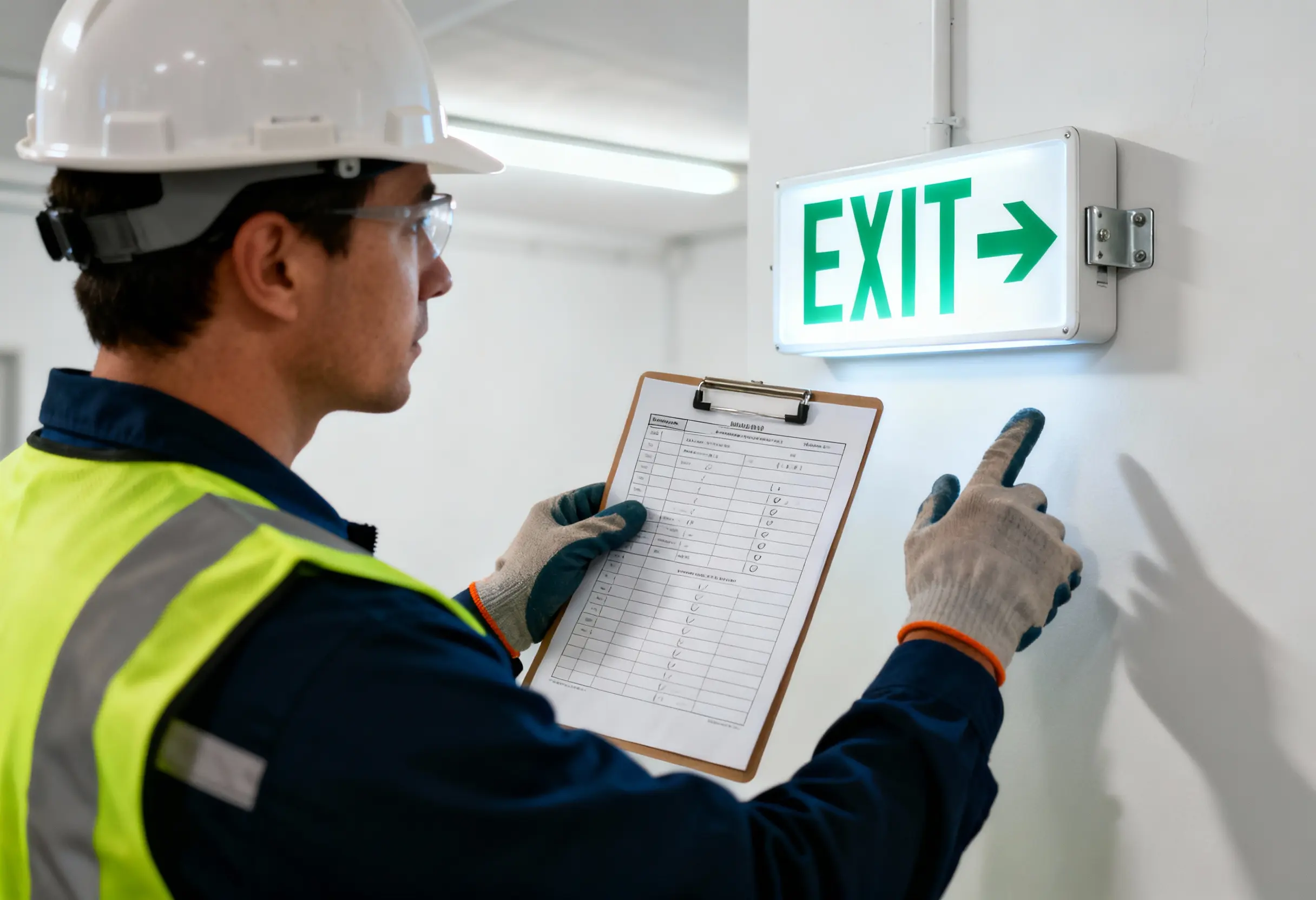
Emergency Lighting Testing in Dubai: How Often and What Facility Managers Must Know
In an emergency, visibility saves lives. When power fails during a fire, smoke fills corridors, panic spreads quickly, and people instinctively search for light. This is why emergency lighting is not treated as a secondary system in Dubai—it is a legally mandated life-safety requirement.
For facility managers, building owners, and safety officers, emergency lighting testing goes far beyond routine maintenance. It is a legally mandated safety duty under the UAE Fire & Life Safety Code and is closely monitored by Dubai Civil Defence (DCD). Skipping inspections, postponing repairs, or failing compliance checks can result not only in regulatory action but also in serious risks to occupant safety.
This guide explains how often emergency lighting must be tested in Dubai, what each test actually checks, and what every facility manager must know to stay fully compliant with UAE fire safety compliance in 2025 and beyond.
Why Emergency Lighting Testing Is Taken So Seriously in Dubai
Dubai’s safety regulations are built around one central idea: failure during evacuation is unacceptable. Emergency lighting plays a direct role in guiding occupants through:
- Smoke-filled corridors
- Stairwells during power outages
- Long evacuation paths in high-rise buildings
- Underground car parks and service areas
Even the most advanced emergency exit lighting system becomes useless if its batteries have degraded or its lamps fail to activate instantly. That is why testing is not optional—it is compulsory, documented, and strictly audited.
How Often Must Emergency Lighting Be Tested in Dubai?
Dubai follows a structured testing framework designed to verify instant activation, sustained performance, and system endurance. Each test serves a different safety purpose.
Monthly Functional Test – Instant Reliability Check
Once every month, emergency lights must undergo a short-duration functional test. During this test, the main power supply is briefly interrupted to confirm that:
- The lights switch on automatically
- No fixtures fail to illuminate
- Charging indicators function correctly
- Battery connections remain intact
This test catches immediate faults such as dead lamps, damaged wiring, or charging circuit failures. While it may only last a few minutes, it verifies whether the system will respond in the first critical seconds of an emergency.
Annual Full-Duration Discharge Test – Evacuation Endurance Check
Once every year, emergency lighting must undergo a full three-hour discharge test, as required under UAE regulations. This is the most critical test of all.
During this test, the entire emergency system runs on battery power for a minimum of three continuous hours. This confirms:
- Whether batteries can sustain a full operational load
- If light output remains usable throughout evacuation
- Whether voltage drops cause fixture failure
- If central battery systems distribute power correctly
Many systems pass the monthly test but fail the annual test due to battery ageing, which often produces dim lighting that is technically “on” but practically unsafe.
Why Central & Monitored Systems Are Now the Standard
Dubai Civil Defence strongly discourages basic stand-alone emergency lights in large facilities. Today, most commercial buildings are expected to use:
- Central battery systems
- Individually monitored self-contained luminaires linked to a central dashboard
These systems automatically report:
- Battery health
- Lamp failure
- Charging errors
- Circuit overloads
This removes manual guesswork and ensures faults are detected before an actual emergency occurs. In modern compliance frameworks, emergency lighting now operates as part of a wider infrastructure that includes alarms, smoke control, and even modern fire suppression systems.
What Facility Managers Are Legally Responsible For
In Dubai, the facility manager or building owner is legally designated as the “responsible person” for fire safety. This responsibility cannot be transferred—even if a contractor makes a mistake.
Key Legal Obligations Include:
- Maintaining a mandatory Annual Maintenance Contract (AMC)
- Ensuring all tests are conducted on schedule
- Keeping detailed inspection and repair records
- Using only DCD-approved emergency lighting components
- Taking immediate corrective action on any failure
Using uncertified technicians or delaying repairs after a failed test exposes the responsible person to legal penalties and operational risk.
The Critical Role of Documentation During DCD Audits
During inspections, DCD officials prioritise records before results. Even if your lights are working perfectly, missing or invalid documentation can still trigger a violation.
Inspectors typically verify:
- Monthly test logs
- Annual discharge reports
- Battery replacement history
- AMC validity certificates
- Technician certification stamps
If records are:
- Incomplete
- Backdated
- Signed by a non-approved entity
The facility may be marked non-compliant immediately.
Emergency Lighting Performance Is About Brightness — Not Just Power
A little-known but crucial requirement is illumination level, not just battery duration.
Dubai expects:
- An average illumination of 10.8 lux along escape routes
- A minimum of 1.1 lux at any point on the floor
- No drop below approximately 60% brightness midway through operation
This prevents a dangerous scenario where lights technically remain ON for three hours but become too dim to guide anyone safely.
High-Risk Buildings Face Stricter Enforcement
Additional scrutiny is applied to:
- Shopping malls
- Hotels and serviced apartments
- Hospitals and clinics
- Schools and training institutes
- Staff accommodations
- Warehouses with public access
These buildings often require:
- Redundant power circuits
- Zoned lighting operation
- Dual battery backups
- Enhanced stairwell illumination
Their emergency exit lighting system must function flawlessly under high occupant load and extended evacuation duration.
The Real Consequences of Non-Compliance
While monetary penalties do apply, the larger risks include:
- Temporary building shutdown by the authorities
- Suspension of occupancy permits
- Trade license renewal delays
- Insurance claim rejections after incidents
- Reputational damage with tenants and operators
This is why many facility managers coordinate their compliance through a fire safety company in Dubai that understands inspection behaviour, documentation protocols, and audit expectations.
Why Professional Testing Is Mandatory — Not Optional
Even though monthly tests appear simple, Dubai regulations require all emergency lighting testing to be executed or certified under an AMC with a DCD-approved firefighting company in Dubai.
This ensures:
- Technical accuracy
- Legal validity of records
- Full inspection readiness
- Protection for the “responsible person”
Most regulated facilities also align their lighting compliance with services offered by fire protection companies in Dubai to maintain uniform regulatory coordination.
Final Thoughts: Emergency Lighting Testing Is a Leadership Obligation
Emergency lighting is not about ticking checkboxes. It exists for the one moment when everything else fails. For facility managers in Dubai, testing frequency, brightness levels, documentation, and monitoring systems are not maintenance details—they are direct safety decisions.
When systems are tested correctly, documented properly, and repaired immediately, emergency lighting becomes more than a regulation. It becomes a silent protector that stands ready when occupants are most vulnerable.
For any facility aiming to meet Dubai’s evolving safety expectations, working alongside a trusted fire safety company in Dubai ensures that emergency lighting compliance is not just achieved—but sustained with confidence.